How it works · 4 min read
Flatbed vs Wheel-Lift: Which Tow Truck Does Your Car Need?
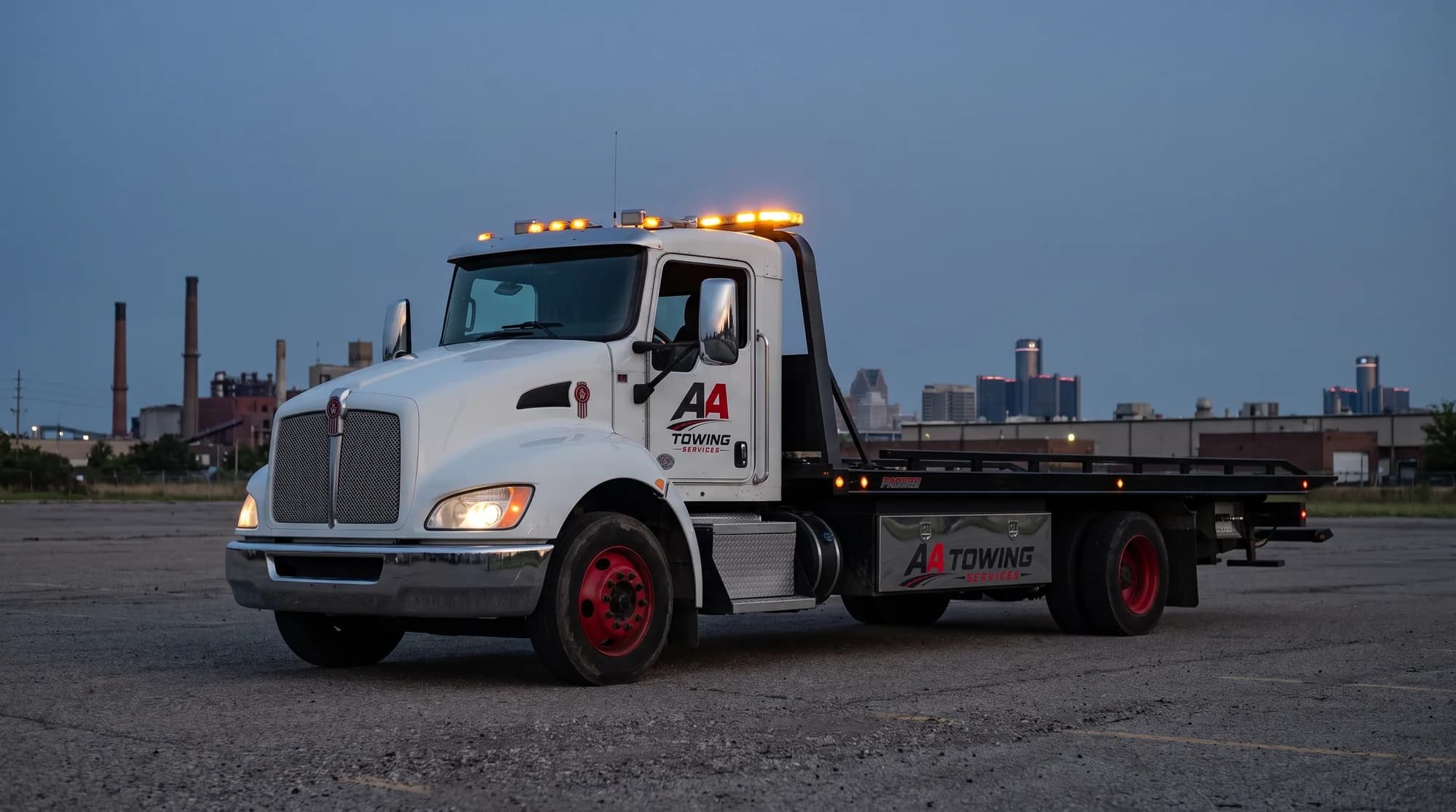
All-wheel-drive, four-wheel-drive, low-clearance and non-rolling vehicles require a flatbed tow truck, because towing them with wheels on the ground can destroy the transfer case, centre differential or transmission. Front-wheel-drive and rear-wheel-drive vehicles that roll freely can normally be towed safely on a wheel-lift.
· AA Towing Services
The difference in one paragraph
A wheel-lift raises one axle and tows the vehicle with the other two wheels rolling on the road. A flatbed carries the entire vehicle on a deck, with nothing touching the ground. The wheel-lift is quicker to hook and better in tight spaces; the flatbed is safer for the vehicle and essential for some drivetrains.
When you need a flatbed
- All-wheel drive or four-wheel drive — wheels turning on one axle while the other is lifted drives the transfer case and centre differential with no lubrication path designed for it
- The vehicle does not roll — seized wheels, crash damage, collapsed suspension
- Low clearance — sports cars, lowered vehicles, anything with a front lip that will not survive a ramp angle
- Classic, exotic or high-value vehicles, where the risk is not worth the ten minutes saved
- Long distance — hundreds of highway miles on two rolling wheels is hundreds of miles of wear you paid for
- Electric vehicles — most manufacturers explicitly require flatbed transport, because a driven axle turning can feed current back through the motor
When a wheel-lift is fine
- Front-wheel-drive or rear-wheel-drive vehicles that roll and steer
- Tight access — parking decks with low ceilings, narrow alleys, packed lots where a flatbed cannot manoeuvre
- Short local moves where the driven wheels can be lifted
- Illegally parked or blocking vehicles that need moving quickly and a short distance
What to tell dispatch
Year, make, model, and whether it is all-wheel drive. That is it. Those four facts decide which truck leaves the yard, and getting them right on the phone is the difference between one truck arriving and two.
If you are not sure whether your car is AWD, say so — the make and model is usually enough for a dispatcher to work it out, and when it is genuinely ambiguous the right answer is to send the flatbed.